




【Keywords】: white residue from cleaning agent, inorganic‑component‑free cleaning agent, pre‑welding cleaning agent, lubrication‑friendly cleaning agent, short‑term rust‑preventive cleaning agent
【Abstract】: After blow‑drying, workpieces often bear white residue marks, which are precipitates left by inorganic‑component‑containing cleaning agents. Such residues may cause porosity during welding and destroy lubricating oil films. Inorganic‑component‑free cleaning agents dominated by organic ingredients, such as CP‑50T, provide a fundamental solution to white‑residue problems.
Sources and Hazards of White‑Residue Marks
Cause of white marks: For cleaning agents containing inorganic components, inorganic salts precipitate upon water evaporation during blow‑drying and form white residues on workpiece surfaces.
Hazard 1 (Welding): Under high welding temperature, white‑mark residues decompose and generate gas and inclusions, bringing about welding defects such as weld porosity and undercut, and increasing reject rate.
Hazard 2 (Lubrication): Inorganic residues break the continuity of lubricating oil films, aggravating friction and wear on mating surfaces and impairing assembly quality and service life.
Hazard 3 (Appearance & function): White residues spoil workpiece appearance. On precision mating parts, residues may flake off into oil circuits and trigger mechanical sticking.
Therefore, for components subject to subsequent welding and lubrication processes, cleaning agents shall realize thorough cleaning with minimal residual substances.
Core Features of CP‑50T Inorganic‑Component‑Free Cleaning Agent
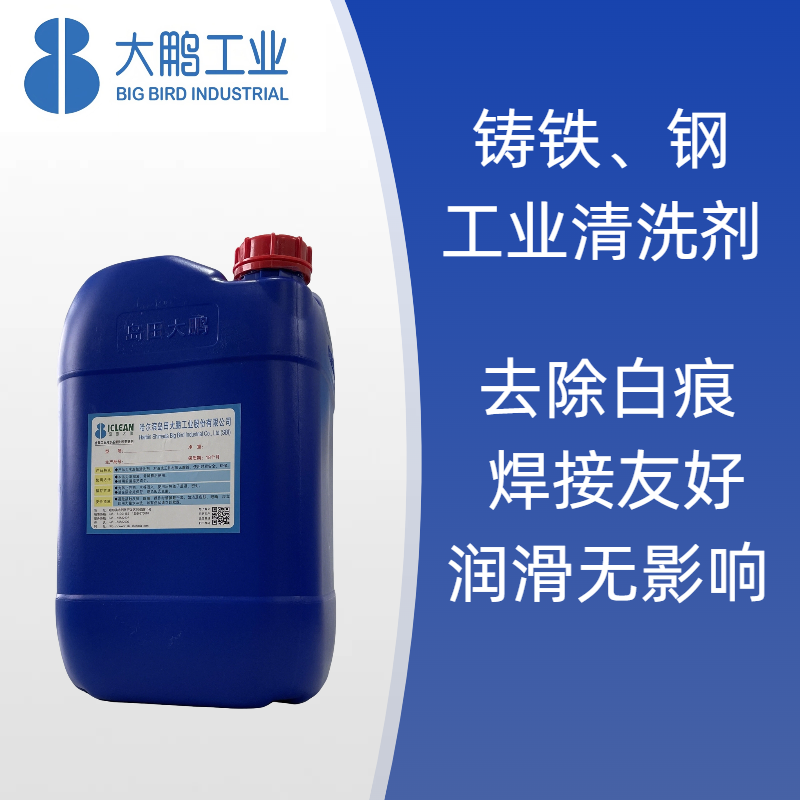
CP‑50T is an inorganic‑component‑free water‑based cleaning agent dominated by organic ingredients, specially designed for process cleaning of automotive‑industry components:
Excellent white‑mark suppression: Free of inorganic components, it remarkably suppresses white‑residue formation after blow‑drying and delivers clean workpiece surfaces.
Welding‑friendly: No residues participate in welding procedures, eliminating adverse effects and stabilizing weld quality.
Lubrication‑friendly: Free of white residues, it will not damage lubricating oil films and imposes no negative influence on subsequent lubrication and assembly operations.
Strong degreasing capacity under heating: Outstanding degreasing performance at 60 °C, enabling rapid cleaning for heavily‑soiled workpieces.
Short‑term rust‑protection: Provides short‑term rust inhibition for steel and iron parts and can serve as a temporary rust inhibitor to simplify manufacturing workflows.
Applicable scenarios: Cleaning for cast‑iron and steel workpieces on automotive‑component production lines, component cleaning in diversified metal‑processing industries, and cleaning of parts to be followed by welding or lubrication processes.
Process Recommendations for Mitigating White‑Residue Problems
Control working concentration within 3%‑10%; prepare initial solution at 5%.
Heat to 60 °C for heavily‑soiled workpieces to obtain optimal degreasing performance.
Thoroughly rinse workpieces with clean water after cleaning, then blow‑dry with compressed air to further reduce residual risks.
For parts requiring subsequent welding, prioritize inorganic‑component‑free grades such as CP‑50T to avoid weld defects induced by white residues.
Leverage its built‑in short‑term rust‑protection performance for inter‑process preservation without extra anti‑rust steps.
FAQ
Q: What causes white residue marks from cleaning agents and can they be avoided?
A: White marks are salt precipitates from inorganic ingredients during blow‑drying. Adopting inorganic‑component‑free cleaning agents such as CP‑50T fundamentally prevents white‑residue formation after blow‑drying.
Q: Why do white residues impair welding quality?
A: Under welding high temperature, white‑mark residues decompose and release gas plus inclusions, resulting in weld porosity, undercut and other defects. Residue‑free CP‑50T brings no adverse impact on welding.
Q: Will cleaning‑agent residues affect lubrication performance?
A: Yes. Inorganic residues disrupt the continuity of lubricating oil films and intensify friction and wear. Dominated by organic components, CP‑50T leaves no white marks after blow‑drying and is compatible with downstream lubrication procedures.
Q: How is the degreasing performance of CP‑50T?
A: CP‑50T achieves prominent degreasing efficiency at 60 °C and rapidly removes machining oil, cutting fluid and other contaminants. It is also usable at room temperature for regular production cycles.
Q: What is the difference between CP‑50T and CP‑600T?
A: Both are inorganic‑component‑free and capable of suppressing white residues. CP‑50T targets general‑purpose process cleaning and highlights compatibility with welding and lubrication. CP‑600T is optimized for pre‑surface‑treatment cleaning with low‑foam characteristics immune to temperature and pressure fluctuations, and is more suitable for high‑pressure spraying conditions.