

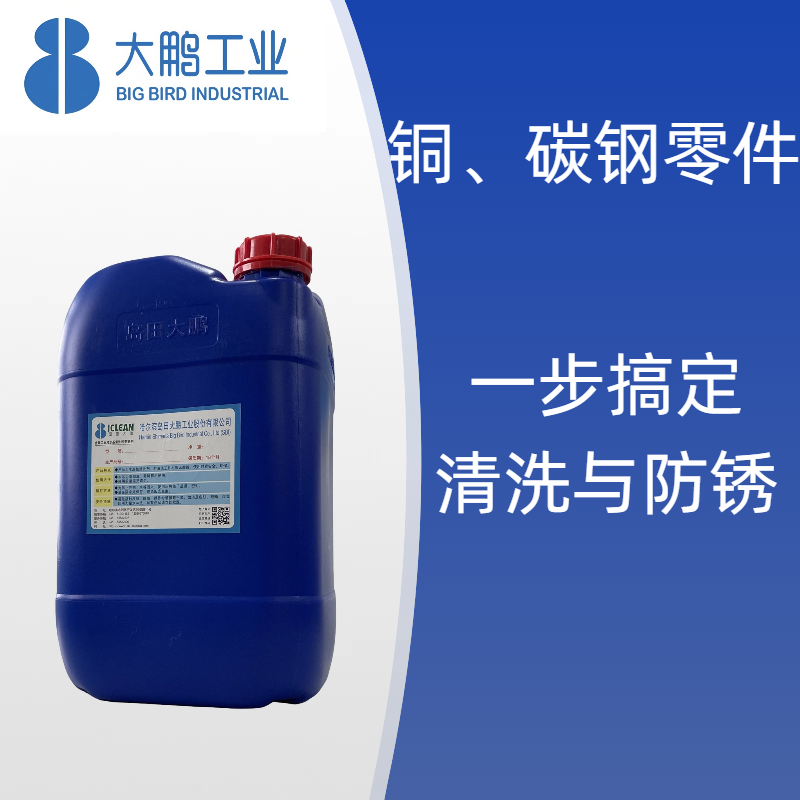



【Keywords】: copper‑part cleaning agent, carbon‑steel cleaning agent, cleaning and rust prevention for copper & carbon‑steel, water‑soluble cleaning‑rust inhibitor
【Abstract】: Copper and carbon‑steel parts are contaminated with cutting oil, drawing oil and stamping oil after machining and prone to rusting and discoloration. CP‑24T integrates degreasing cleaning and short‑term rust prevention. It is weakly alkaline and non‑corrosive to copper, applicable to post‑machining cleaning processes for copper and carbon‑steel components.
Cleaning Requirements for Copper and Carbon‑Steel Parts after Machining
After machining, stamping and drawing processes, copper and carbon‑steel components (copper tubes, carbon‑steel fasteners, stamped parts, drawn parts, etc.) carry surface contaminants including:
‑ Cutting oil and cutting fluid
‑ Drawing oil and stamping oil
‑ Metal chips and dust
Meanwhile, copper parts tend to oxidize and discolor, while carbon‑steel parts are susceptible to rust. Therefore, an ideal cleaning solution shall deliver powerful degreasing performance together with material compatibility: non‑corrosive to copper and rust‑protective for carbon steel.
Core Features of CP‑24T Special‑Purpose Cleaning Agent for Copper & Carbon Steel
CP‑24T is a dedicated water‑soluble cleaning‑rust inhibitor for post‑machining metals such as copper and carbon steel:
‑ Rust protection & material compatibility: Non‑corrosive to copper metals and provides favorable short‑term rust protection for carbon‑steel metals. Workpieces hardly get rusty or discolored after cleaning.
‑ Mild and safe: Weak‑alkaline property with low irritation. Low skin hazard upon prolonged contact for safer operation.
‑ Powerful degreasing: Rapidly removes various machining contaminants such as cutting oil, drawing oil and stamping oil, delivering thorough cleaning without residues.
‑ Multi‑process compatibility: Suitable for ultrasonic cleaning, spraying cleaning and other cleaning equipment with wide process adaptability.
‑ Easy preparation: Simple mixing, moderate cleaning‑temperature range, low operation threshold, and environmentally‑friendly waste‑liquid treatment.
Applicable scenarios: Post‑machining cleaning for copper, carbon‑steel and other components.
Process Recommendations for Copper and Carbon‑Steel Part Cleaning
Product selection: Directly adopt CP‑24T for mixed‑line copper‑carbon‑steel workpieces to realize one‑step degreasing and rust prevention.
Process option: Ultrasonic cleaning is recommended for parts with complex structures and deep holes; spraying cleaning is available for mass‑produced flat‑surface parts.
Solution mixing: Dilute at recommended concentration (reference: 2%‑5%), adjust according to contamination severity.
Rust‑protection follow‑up: Its short‑term rust‑proof performance serves inter‑process transfer and temporary storage. Special‑purpose rust oil or rust inhibitor is suggested for long‑term storage.
Solution management: Test concentration every week and perform scheduled solution replacement and sterilization following knowledge‑base standards (see Article 3).
FAQ
Q: Will copper parts discolor after cleaning?
A: No discoloration will occur with proper use of copper‑safe special‑purpose cleaning agents such as CP‑24T. Avoid strong‑alkaline general‑purpose cleaners containing corrosive ingredients for copper workpieces.
Q: Can CP‑24T clean copper and carbon‑steel parts simultaneously?
A: Yes. Specially formulated for copper and carbon steel, CP‑24T is non‑corrosive to copper and offers short‑term rust protection for carbon steel, ideal for mixed copper‑carbon‑steel production lines.
Q: Is CP‑24T suitable for ultrasonic cleaning?
A: Yes. CP‑24T is compatible with ultrasonic cleaning, spraying cleaning and other equipment. It is especially fit for ultrasonic cleaning of copper‑carbon‑steel parts with complex structures and deep holes.
Q: How long does the rust‑protection effect last for cleaned carbon‑steel parts?
A: It provides short‑term rust protection for inter‑process transfer and temporary storage. For longer‑term protection, use rust oil or water‑soluble rust inhibitor such as PP‑3.