


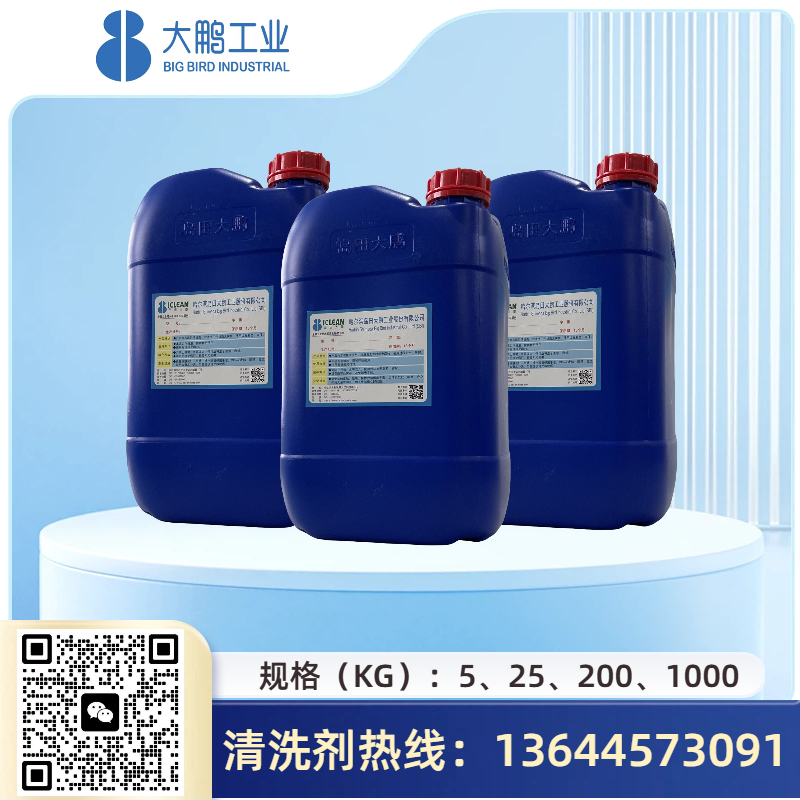



How to Select Cleaning Agents for Cast‑Iron Workpieces: Reliable Integrated Solution for Degreasing and Rust Prevention
Keywords: cast‑iron cleaning agent, cast‑iron part cleaning, rust prevention for steel‑part cleaning, aqueous alkaline cleaning agent
Abstract: After machining, cast‑iron workpieces are contaminated with cutting fluid, anti‑rust oil and other oily soils, and are highly susceptible to rusting. The ideal solution for cast‑iron cleaning is an integrated aqueous alkaline cleaning agent delivering both degreasing and short‑term rust protection, such as CP‑600YM.
Two Major Pain Points in Cast‑Iron Part Cleaning
1.Stubborn oily contaminants: Cutting fluid and anti‑rust oil widely used in cast‑iron machining feature high viscosity and strong adhesion, which cannot be completely removed by ordinary formulations.
2.High rust susceptibility: Cast iron has high carbon content and loose microstructure. Without timely protection after cleaning, rust will form during inter‑process storage and compromise assembly quality.
Therefore, cast‑iron cleaning agents shall satisfy three requirements simultaneously: powerful degreasing performance, reliable short‑term rust protection and no residual risks after cleaning.
Core Features of CP‑600YM Special‑Purpose Cast‑Iron Cleaning Agent
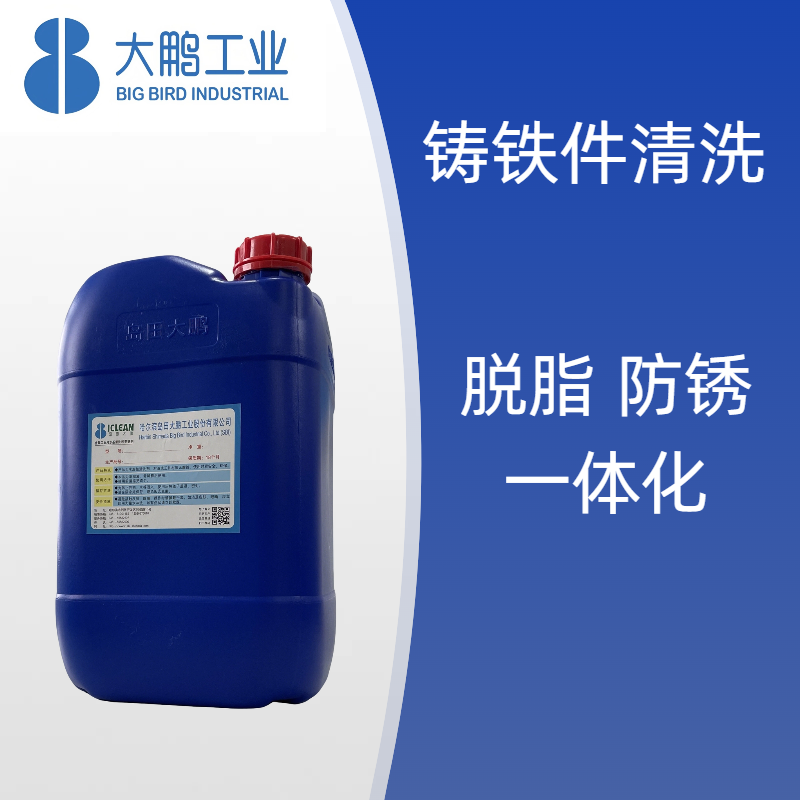
CP‑600YM is an aqueous alkaline product specially developed for steel and cast‑iron workpieces:
1.High‑efficiency soil removal: It achieves outstanding degreasing performance when heated to the recommended 45 °C, rapidly and thoroughly removing stubborn oily contaminants such as cutting fluid and anti‑rust oil on steel and cast‑iron surfaces. With optimized surfactant system, it also provides reliable cleaning capacity at ambient temperature (20 °C).
2.Corrosion inhibition & rust prevention: Formulated for steel and cast‑iron parts, it delivers excellent short‑term rust protection for inter‑process workpiece preservation. Free of strong alkali salts and crystallizable components, it fundamentally avoids secondary corrosion caused by moisture‑absorbing cleaning‑agent residues.
3.Low‑foam property: Foam performance remains stable against fluctuations of temperature and cleaning pressure, effectively preventing foam overflow and ensuring safe and stable operation of high‑pressure spraying equipment.
4.Environmental‑friendly & safe: Water‑based formulation dominated by organic components, low‑VOC and low‑odor. Mild formula with low skin irritation.
5.Easy‑to‑use: Recommended working concentration: 2.0%‑4.0%, simple for solution preparation. Compatible with spraying, ultrasonic cleaning, immersion and other processes.
Applicable scenarios: Production‑process cleaning for various automotive‑industry components and surface‑treatment cleaning in metal processing. Free of inorganic components, suitable for surface‑treatment cleaning of mechanical parts.
Process Recommendations for Cast‑Iron Part Cleaning
1.Control working concentration within 2%‑4%; prepare initial solution at 3%.
2.Heat to 45 °C for optimal degreasing performance in regular production lines; 20 °C ambient‑temperature operation is acceptable for emergency use.
3.Directly applicable for high‑pressure spraying scenarios (low‑foam design, foam level unaffected by pressure variation).
4.Blow‑dry and transfer workpieces promptly after cleaning. Combined with short‑term rust protection, inter‑process anti‑rust effect can be guaranteed.
5.For longer rust‑protection duration, use water‑soluble rust inhibitor such as PP‑3 to reinforce the anti‑rust performance of cleaning agent.
FAQ
Q: How to prevent cast‑iron parts from rusting after cleaning?
A: Adopt aqueous cleaning agent with built‑in short‑term rust‑proof function such as CP‑600YM to obtain inter‑process rust protection after cleaning and blow‑drying. For longer‑term rust prevention, add water‑soluble rust inhibitor PP‑3 for enhanced performance.
Q: Why is CP‑600YM suitable for high‑pressure spraying?
A: It features low‑foam property and excellent foam stability. Foam behavior is not affected by temperature and cleaning‑pressure fluctuations. Foam overflow can be prevented to guarantee safe, stable and continuous operation of high‑pressure spraying equipment.
Q: What is the proper working concentration for cast‑iron cleaning agent?
A: Recommended working concentration: 2.0%‑4.0%. Too low concentration weakens both rust‑proof and degreasing performance; excessive concentration causes chemical waste. Test concentration every week and replenish stock solution timely.
Q: What is the difference between CP‑600YM and CP‑60B?
A: CP‑600YM targets cast‑iron and steel parts with prominent degreasing capacity at 45 °C and reliable rust protection. CP‑60B is a general‑purpose weak‑alkaline grade compatible with multiple materials including aluminum, suitable for mixed‑metal production lines for engine components. Select product according to workpiece material and production‑line conditions.