





【Keywords】:concentration management of aqueous cleaning agents, cleaning solution replacement, cleaning agent maintenance, cleaning‑solution sterilization
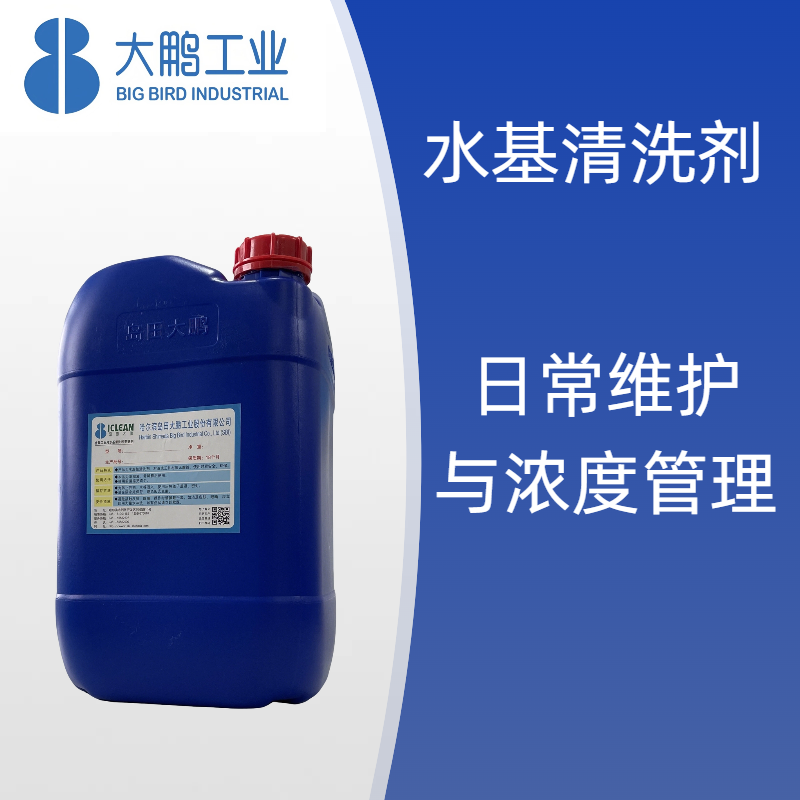
【Abstract】:Aqueous cleaning agents deliver performance not only through application but also through proper management. Scientific control of concentration and pH value, together with regular solution replacement and sterilization, are critical to extending service life of cleaning solution, stabilizing cleaning quality and cutting comprehensive costs.
I. Concentration Management: Recommended Concentration and Dosing Calculation
Most Dapeng Industrial aqueous cleaning agents are recommended for working concentration of 2%‑4%. Key points for concentration management:
‑ Concentration calculation: Tank volume × 3% (target concentration) = on‑site working concentration. Add stock solution at 3% for initial solution preparation.
‑ Testing frequency: Concentration is generally tested once per week.
‑ Make‑up solution calculation when concentration drops: Stock solution dosage = (target concentration − measured on‑site concentration) × tank volume.
‑ Management target: Insufficient concentration leads to reduced detergency and rust‑proof performance. Excess concentration causes chemical waste and potential foaming risk.
II. pH Value Management
‑ Test pH value of working solution regularly with a pH meter.
‑ Supplement stock solution or pH booster when pH value decreases.
‑ Obvious pH drop for weak‑alkaline grades (e.g. CP‑60B, pH 8‑10) usually indicates chemical consumption or contaminant ingress.
III. Removal of Suspended Solids and Impurities
‑ Remove contaminants promptly with filter screens when suspended substances occur.
‑ Periodically clean sediments at tank bottom to avoid secondary contamination and bacterial growth.
IV. Maintenance Requirements During Shutdown
For long‑term non‑continuous operation such as long‑holiday shutdown:
Run the equipment twice every day, no less than 3 hours per run, to prevent solution deterioration under static status.
Add biocide before long‑term shutdown.
Foam generation after restart is normal and will fade gradually upon circulation.
V. Standard Operating Procedure (SOP) for Solution Replacement and Sterilization
Step 1: Complete waste‑solution draining
Drain waste solution thoroughly.
Step 2: Internal equipment cleaning
Clean the tank and equipment interior with brushes, long‑handle mops or rags. Use high‑pressure water jet for hard‑to‑reach areas including tank walls and corners to eliminate residual contaminants.
Step 3: Circulating cleaning with 1% cleaning agent
Add cleaning agent to reach 1% concentration (stock solution contains biocide). Heat to 60 °C and circulate for 3 hours, then drain. Thoroughly clear sediments at tank bottom after draining to avoid secondary contamination.
Step 4: Sterilization circulation with biocide
Add biocide at 0.5% of tank volume (5 ‰; for example, 25 L biocide for a 5000 L tank). Circulate for minimum 1 hour then drain. Better sterilization effect can be achieved if heating to maximum allowable equipment temperature is available.
Supplementary requirements: If production does not resume right after solution replacement, run circulation over twice per day for each unit, no less than 1 hour per run. Add appropriate biocide and run circulation when equipment stands idle.
VI. Hidden Risks and Protection after Solution Replacement
‑ Previous deteriorated solution leaves potential contamination risk. Service life of fresh solution may be shortened. Add small‑dose biocide for consolidation during environment recovery phase.
‑ Single sterilization cannot eliminate deterioration risk completely. Repeat sterilization for next 2‑3 solution‑replacement cycles.
‑ Cyclic sterilization is no longer required once cleaning environment returns to normal; follow routine maintenance specifications.
FAQ
Q: How often shall cleaning‑agent concentration be tested?
A: Generally once every week. When concentration decreases, add stock solution calculated by formula: added volume = (target concentration − measured on‑site concentration) × tank volume to reach target value.
Q: Why circulate 1% cleaning agent at 60 °C for 3 hours during solution replacement?
A: The stock cleaning agent contains biocide. 3‑hour circulation at 60 °C cleans and sterilizes tanks and pipelines, preventing residual deteriorated fluid from contaminating fresh solution. This step is essential to guarantee service life of new solution.
Q: What is the recommended biocide dosage?
A: Add biocide at 0.5% (5 ‰) of tank volume, e.g. 25 L biocide for a 5000 L tank. Circulate for at least 1 hour. Heating to maximum equipment temperature will improve performance if feasible.