




Applicable industries: Commercial vehicles, passenger vehicles (including new energy vehicles), and other fields
Corresponding parts: Components of new energy power systems, components of diesel/gasoline vehicle power systems
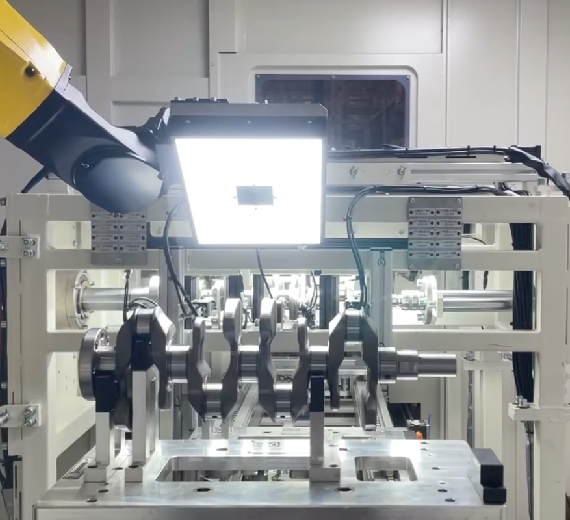
Equipment Description:
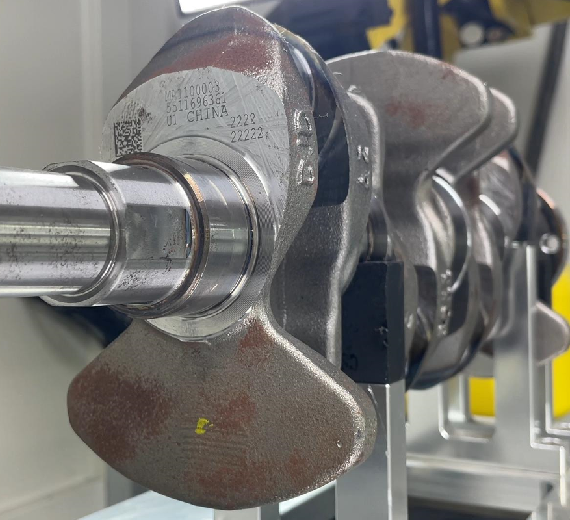
Check whether the QR code on the workpiece is complete.
Check whether the counterweight hole of the crankshaft is side-pierced.
Check whether there are any foreign objects in the center hole of the crankshaft.
Inspect whether there are any defects on the small end face of the long journal of the crankshaft. The defects include: bumps, scratches, spots, abrasions, slag inclusions, cracks, black skin, material deficiency, oil and water.
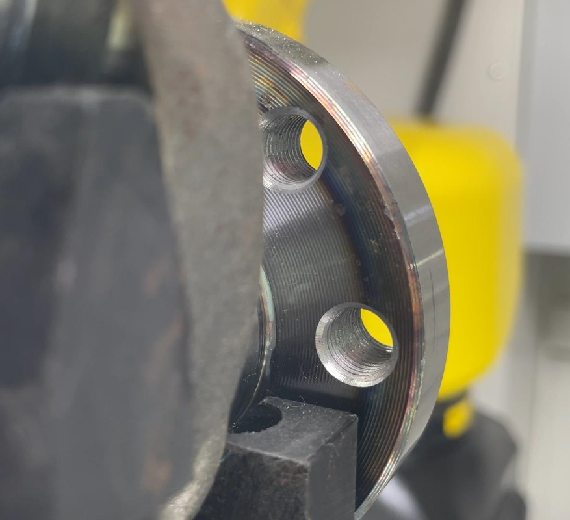
Inspect the defects on the crankshaft flange (defects include: dents, scratches, spots, abrasions, slag inclusions, cracks, black skin, material deficiency, oil and water).
Inspect for defects on the main journal, connecting rod journal, long journal, flange journal and keyway of the crankshaft (defects include: dents, scratches, spots, abrasions, slag inclusions, cracks, black skin, material deficiency, oil and water).
Equipment functions: Code reading, machine vision inspection (deep learning), traceability, data analysis, inspection area demarcation, remote viewing
Equipment Specifications
Production cycle time: 48 seconds (customized according to the workpiece conditions)
Industrial cameras: 5-megapixel area array cameras x 2, 20-megapixel area array cameras x 12, custom endoscopes x 3
Light source: 1 large light source group, 2 strip light groups
Control system: Advantech industrial computers × 2
Collaborative robots: AILIT, Siasun, HAN's, JAKA