

As new energy vehicles rapidly evolve, flexible mixed-line production across multiple models has become the industry norm. This places increasing demands on vehicle quality inspection in terms of accuracy, flexibility, and digital capabilities, making traditional inspection methods inadequate to meet the standards and requirements of intelligent manufacturing.
Traditional manual quality inspection lacks standardization and digitization, making it difficult to ensure consistent inspection results and establish a complete data traceability system, which hinders process iteration and optimization. Fixed automated inspection systems have limited adaptability, struggle to cover narrow and concealed areas of vehicle bodies, cannot quickly switch between different models during production, and are unable to achieve full-vehicle comprehensive inspection.
To meet the industry's upgraded quality inspection needs, Harbin Shimada Big Bird Industrial Co., Ltd. and its subsidiary, CN ISEE (Harbin) Intelligent Inspection Tech Co.,Ltd., have leveraged their mature technology ecosystem to launch the Doctor Series Assembly See portable handheld inspection device. Specifically designed for comprehensive quality control in automotive final assembly, this solution helps automakers achieve intelligent and flexible inspection upgrades. The device integrates both traditional machine vision and AI deep learning algorithms, balancing operational stability with advanced intelligent recognition capabilities: traditional algorithms ensure high-speed inspection, adapting seamlessly to standard production line cycles; while AI algorithms autonomously learn various defect characteristics, accurately identifying interior color differences, misalignments, missing components, and subtle surface flaws. This effectively eliminates inspection blind spots and significantly enhances overall vehicle quality inspection accuracy.
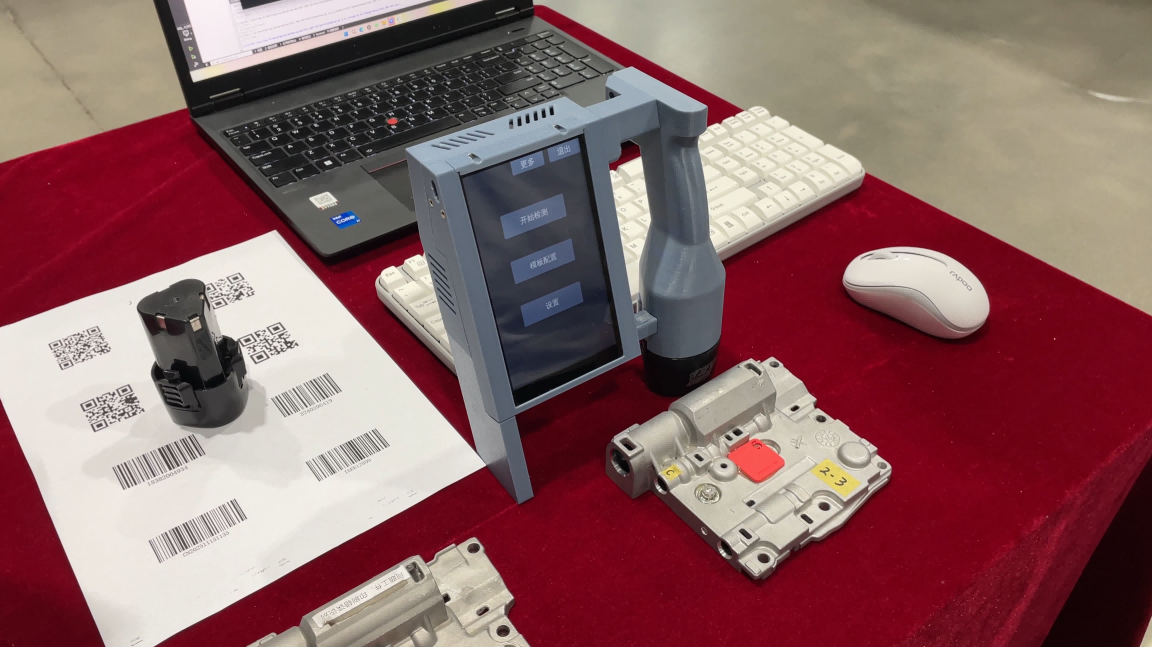
The product features a lightweight, handheld, all-in-one design that requires no production line modifications or complex deployment. It can flexibly access narrow and hard-to-reach areas of vehicle bodies, enabling comprehensive, seamless quality inspection across the entire vehicle. Equipped with high-definition wide-angle imaging components and high-brightness lighting, the device performs well in dim working environments. Supporting wireless transmission and quick battery replacement, it eliminates cable constraints, allowing for on-the-go inspections with each check taking less than one second, ensuring uninterrupted production line operations. The device also supports offline configuration and independent maintenance, remaining stable and reliable even during network fluctuations or server maintenance. Furthermore, it seamlessly integrates with automotive manufacturers' MES systems, automatically handling task assignment, data upload, and result archiving to establish a complete quality traceability loop. This provides precise data support for process optimization and quality control, helping build a digital, intelligent quality inspection system.
The device has now been successfully deployed in major domestic automakers. Leveraging its core advantages of easy deployment, high flexibility, high precision, and low cost, it effectively helps enterprises improve quality and reduce costs while optimizing production processes. It serves as an excellent solution for lightweighting and intelligent upgrading of vehicle inspection in the era of smart automotive manufacturing.